
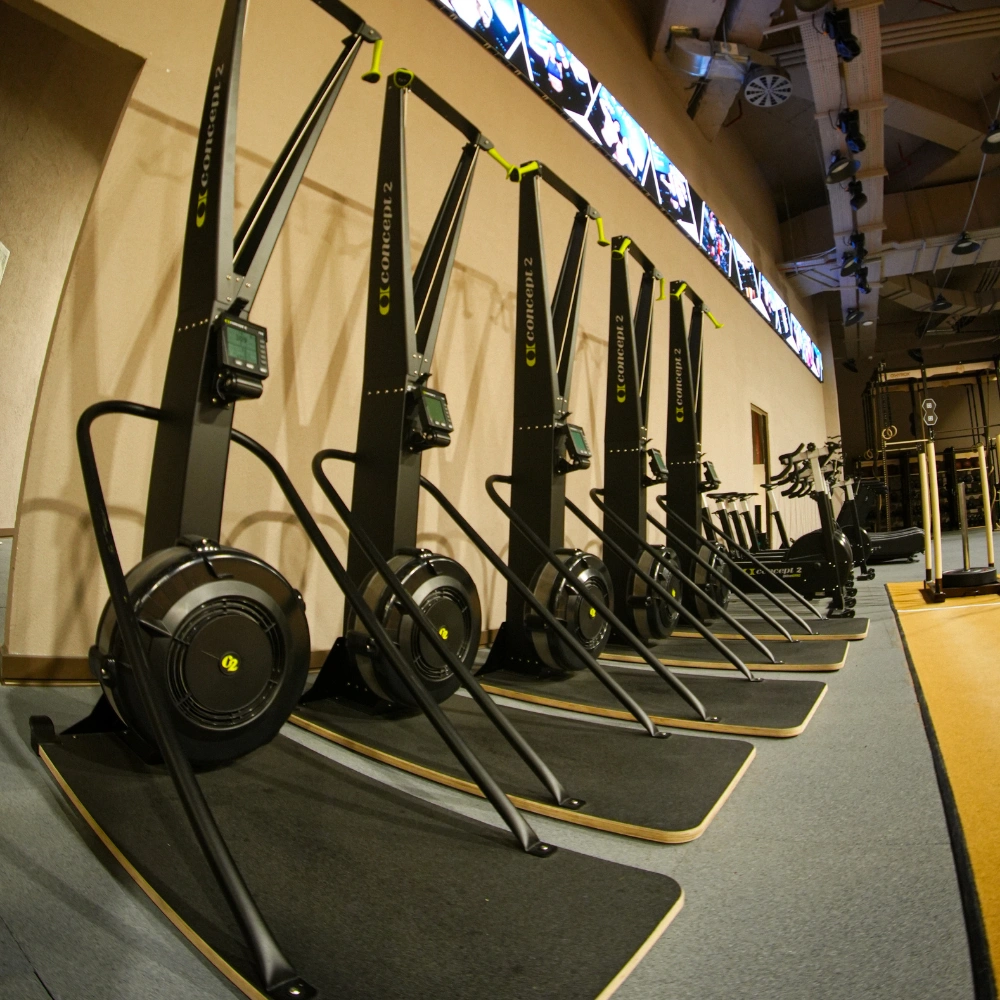
Speed Training Guide for Athletes: Acceleration, Max Velocity and Agility
Acceleration, maximum velocity and agility: the mechanics, drills and weekly programming principles of speed training for athletes.
In most sports, speed is the single variable that decides games — and the good news is that speed is trainable. But sprinting and speed training aren't the same thing. This guide covers three separate abilities — acceleration, maximum velocity and agility — the mechanics of each, and the programming principles we apply at Skyland.
The three phases of speed
Acceleration (0–20 m)
During acceleration the body leans forward (about 45°), steps are short and powerful, and ground contact time is long. The decisive quality is horizontal force production. That's why acceleration work is done with heavy sled pushes, wall drills and 10–20 m sprints. Since most sprints in team sports are under 20 meters, this is the most valuable phase for football, basketball and padel players.
Maximum velocity (20–40 m)
The torso becomes upright, ground contact time shortens, and stride frequency and stride length balance out. What's decisive here is vertical force production and elastic tendon qualities. It's developed with flying sprints, wicket drills and 30–40 m sprints. Reaching maximum velocity once a week has a protective effect against hamstring injuries; this is called a “speed vaccine.”
Speed endurance
The ability to produce near-maximal speed again and again. It's trained with 60–150 m repeats and repeated sprint ability (RSA) sets, and becomes more important in-season.
Agility: planned and reactive
Change of direction (COD) is braking and re-accelerating along a predetermined route; agility is changing direction in response to a stimulus (an opponent, the ball). COD mechanics relate to eccentric strength and body angle: the 5-0-5 test measures this. Reactive agility involves the perception-decision process and is developed with mirror drills and light/sound-cued work. Agility can't be developed with cone drills alone; braking strength and decision speed must be trained together.
The golden rules of speed training
- Start fresh: The speed session goes on the most rested day of the week and at the start of the session. Sprinting while fatigued trains endurance, not speed.
- Rest fully: About 1 minute of rest per 10 meters sprinted. 3 minutes after a 30 m sprint.
- Protect quality: The session ends when times drop by more than 3–5%. Total sprint volume per session is 150–300 m.
- Support it with strength: Without the trap bar deadlift, Nordic curl and single-leg strength, speed development plateaus.
- Measure: 10/20/30 m times are recorded every block with timing gates or an app.
Sled training: how to choose the load
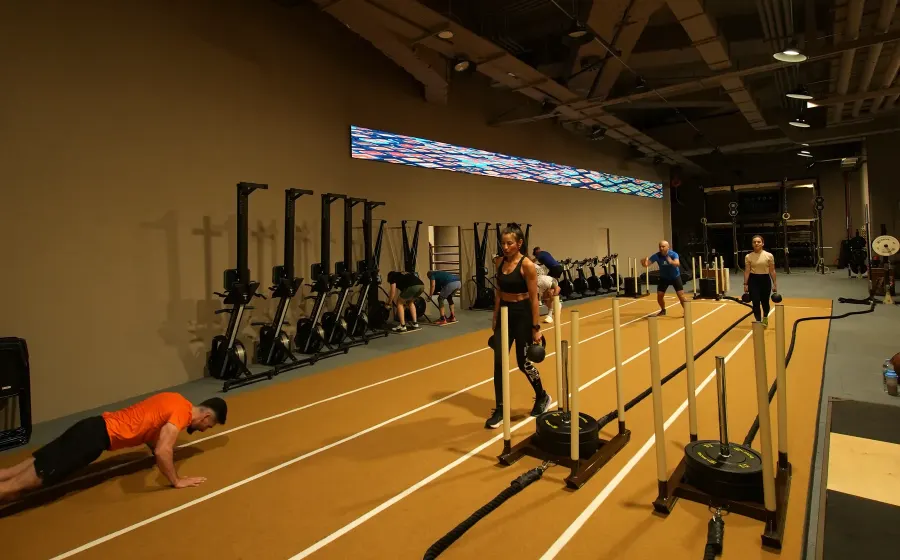
Resisted sprinting is one of the most effective tools for acceleration. Load is chosen based on the goal: light loads that reduce maximum velocity by 10–20% to gain speed while preserving technique; heavy loads (70–100% of body weight) that reduce speed by up to 50% to develop horizontal force production. Heavy sled work is paired with strength days, while light sled work fits speed days.
Sample week (pre-season, team-sport athlete)
- Tuesday — Acceleration: Warm-up + A-skip, wall drill 3×5, heavy sled 6×15 m, 10 m sprint 6×, 20 m sprint 4×.
- Thursday — Agility: Braking drills, 5-0-5 4×, mirror drill 6×10 s, reactive tag 6×.
- Saturday — Maximum velocity: Wicket drill 4×, flying 20 m 4×, 30 m sprint 3×. Total 200 m.
Frequently asked questions
Is speed genetic?
The ceiling is partly genetic; but most athletes are far below their ceiling. With mechanics, strength and programming, a 5–8% improvement in 10 m time is common.
Can you sprint on a treadmill?
Non-motorized treadmills are useful for acceleration; standard treadmills disrupt sprint mechanics and aren't recommended.
How many weeks until you see results?
In the first 4–6 weeks, measurable improvement in times comes from technical corrections; strength-driven gains become clear in 8–12 weeks.
To build your speed profile, Athletic Performance join an assessment; your sprint and agility measurements become the first page of your program.
Related articles.

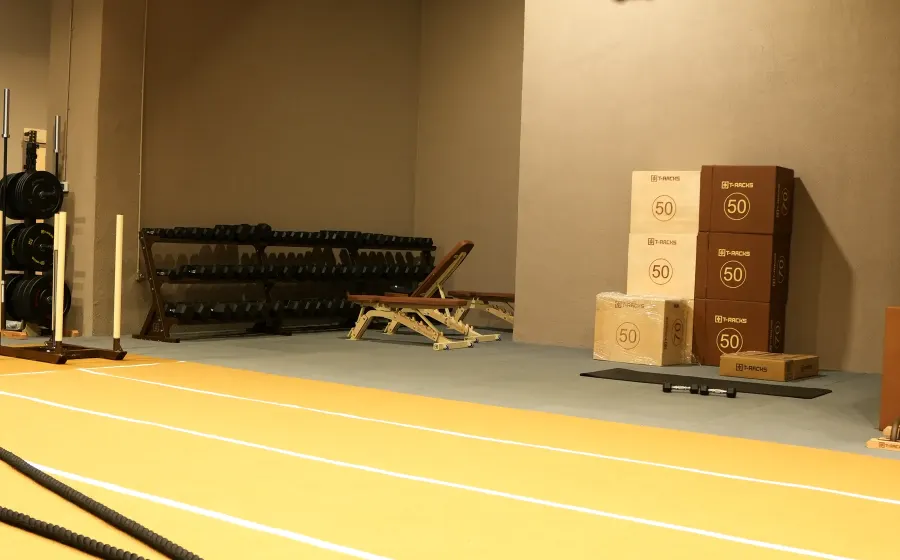
The Aerobic Base for Speed Athletes: Supporting Recovery Between Sprint Repetitions
Sprinters and team-sport athletes do not run long distances, yet aerobic capacity still matters. A simple base-building approach to support recovery between repetitions.
10K and half marathon preparation: the logic of a 10-week plan
The block logic of a ten-week 10K and half marathon build: base building, deload, intensity, sharpening and taper phases, plus the anatomy of a training week.
Transitioning to trail running: an adaptation guide for road runners
Moving from pavement to trail: building downhill tolerance and ankle stability, and learning to run by effort. The logic of an eight-week gradual transition plan.
