
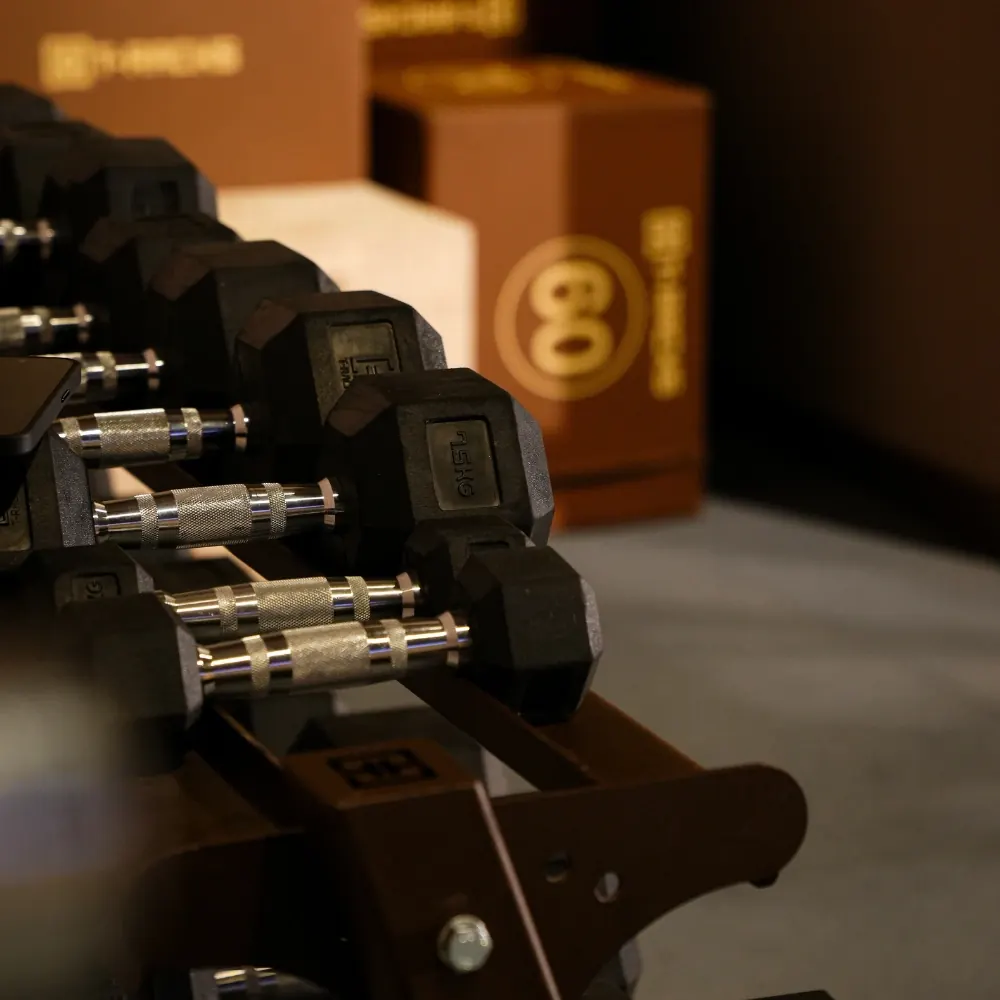
Personal training vs. an individual performance program: what's the difference?
What's the difference between personal training and an individual performance program? Goals, testing, content and who needs which.
“Personal training” and “individual performance program” are often used interchangeably in everyday language. Yet they answer different questions. Knowing which one suits you is an important decision for both your time and your budget.
The key difference: what's your goal?
Personal training is usually built around health, body composition, physique and general fitness goals. Success is measured by weight, measurements, appearance and overall well-being.
An individual performance program, on the other hand, focuses on measurable athletic outputs: sprint times, jump height, strength numbers, aerobic capacity and how they translate to your sport. Success is measured by test results that support on-field performance.
| Personal training | Individual performance program | |
|---|---|---|
| Main goal | Health, physique, body composition | Measurable athletic development |
| Starting point | General assessment, goal-setting consultation | Test battery (jump, sprint, strength, aerobic) |
| Planning | Weekly / monthly | Blocks tied to the season calendar |
| Tracking | Measurements, weight, subjective progress | Retesting, load monitoring, asymmetry |
| Session | Balance of strength, cardio and mobility | Strength, power, speed, energy systems, recovery |
| Best suited for | Adults with general goals | Athletes or performance-driven individuals |
How does the content differ?
A personal training session typically includes a balanced full-body workout, a cardio component and mobility. The goal is to make weekly activity sustainable and to build general capacity.
In a performance program, by contrast, the order and content of sessions are built around physiological priorities: work with high nervous system demand (sprints, jumps, heavy strength) is done while fresh and on specific days of the week; conditioning is chosen to match the energy system profile of the sport; plyometric volume is tracked by contact count. Sport practice is also factored in as part of the total load.
The measurement difference
This is the most decisive distinction. A performance program starts with a standardized test protocol and repeats the same tests every 4–6 weeks. The program is updated based on what the results show. Personal training usually doesn't include such a battery; progress is tracked mostly through the weights used and subjective feedback.
Which one is right for whom?
Personal training may be right for you if:
- Your goal is general health, weight management or building a regular exercise habit
- Your sports background is limited and you want to build a foundation first
- You don't have a competition or match calendar
- You're looking for a flexible program and motivational support
An individual performance program may be right for you if:
- You're a licensed athlete or have a regular match/race calendar
- You have a specific performance goal: running faster, jumping higher, finishing a race
- You have recurring injuries and want to understand why
- You want to see your progress in numbers
- You have years of training behind you and have hit a plateau
Can you do both?
This is often the best solution. A combination of two days a week of performance programming (strength, power, speed) and one day of personal training support (technique correction, mobility, individual weak links) works for many athletes. The key is that the two sides don't work in isolation; total weekly load should be visible in a single plan.
Cost and time
Because a performance program includes testing and reporting, it is usually a more comprehensive service. On the other hand, the number of weekly sessions may be lower: 2–3 well-planned sessions produce more results than 5 scattered ones. For time-constrained athletes, this is a clear advantage.
Common mistakes
- Giving an athlete a general fitness program: The energy system and movement demands of the sport go unmet.
- Giving a general-goal client an athlete program: Unnecessary intensity, low adherence and high injury risk.
- Using both services without coordination: Total weekly load rises unchecked.
- Claiming performance gains without measurement: “I feel better” is valuable, but it's not a performance indicator.
Frequently asked questions
I'm not an athlete but I want a performance program. Is that possible?
Yes. For adults who want to improve their personal records, the program is scaled accordingly.
Can group classes replace these?
Group classes are valuable for conditioning and motivation; on their own, they aren't enough for goals that require individual measurement and periodization.
Which one helps you lose more weight?
Weight management depends largely on nutrition and total activity; both services are more effective when combined with dietitian support.
To figure out together which one is right for you, message us; our class and program options too.
Related articles.
Block periodization vs. linear periodization: which athlete needs which?
We compare block periodization with linear and undulating models: which suits which athlete, and how to choose.
Dryland training for swimmers: strength, mobility and core
Dryland training for swimmers: a shoulder health, core stability, pull strength and start-and-turn power program.
High performance for masters athletes (35+): strength, speed and recovery
Strength, speed and recovery for masters athletes (35+): how physiology changes with age, program adjustments and ways to maintain performance.
