
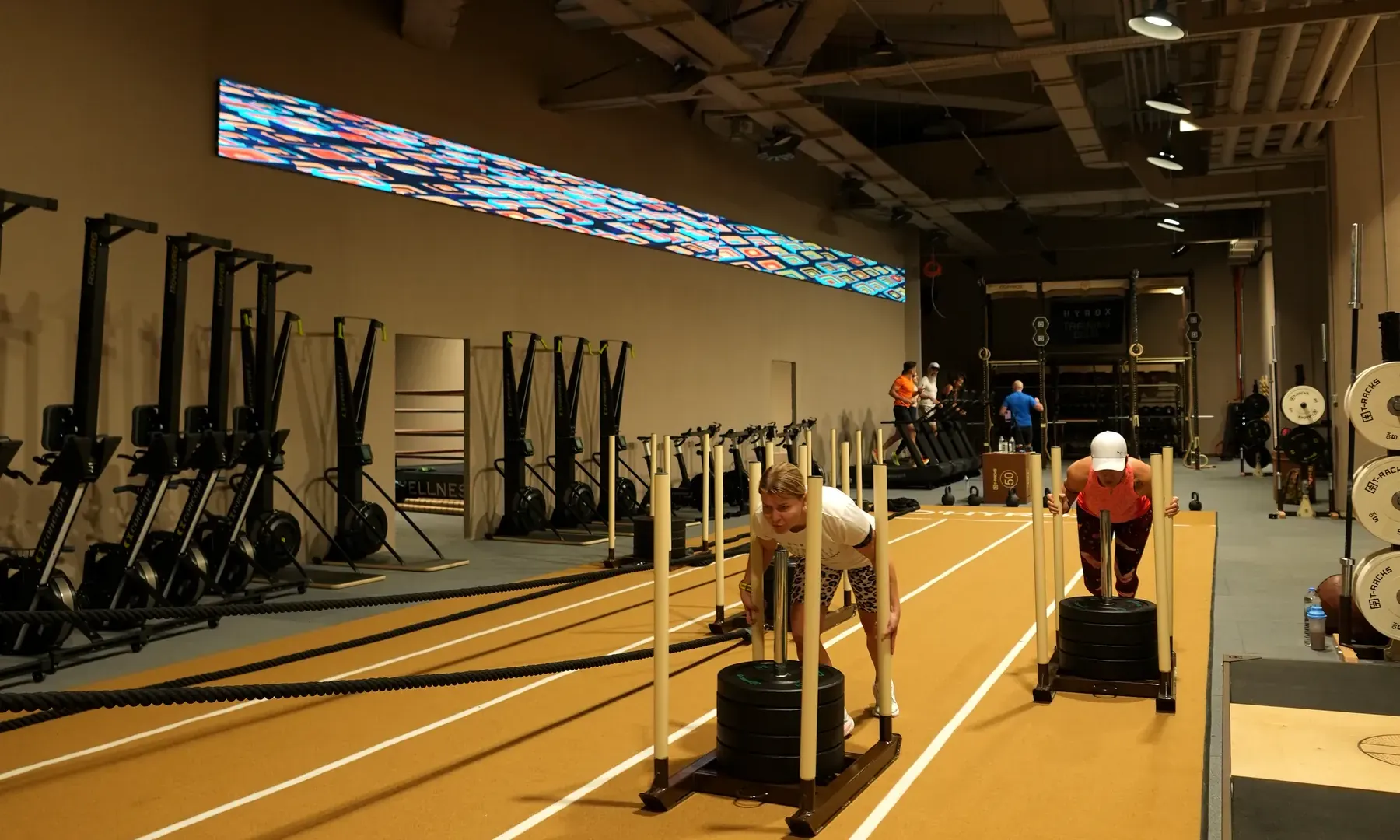
Motor learning: why technique sticks through good practice, not just repetition
Doing a movement a thousand times does not create mastery; how you practise matters as much as how often. Motor learning principles speed up athlete development.
Motor learning is the process by which a movement becomes more consistent, more efficient and more automatic with practice. A sprint start, the descent of a squat or the landing after a jump are all learned motor skills. Most of the principles we use when planning technique work at O'Athletic Sky in Skyland Istanbul come from research in this field.
A common belief is that the more repetitions, the better. Yet the quality, variety and feedback of repetition often matter more than the count. In this article we gather the core ideas that athletes and coaches can apply in everyday training.
Performance and learning are not the same thing
A movement that looks good during practice has not necessarily been learned permanently. Research shows that conditions that look easy and fluid during practice often weaken long-term retention, while difficult but meaningful conditions increase it. A session that goes smoothly is therefore not always the most effective one.
It is therefore healthier to judge learning by whether the movement is still correct a few days later or when tired. In-session performance is only the first signal.
Variable practice: the strength of variety
Repeating the same movement under identical conditions (blocked practice) gives a feeling of rapid progress. But match and race conditions constantly change: surface, opponent, fatigue and speed differ. In variable practice the small parameters of the movement are deliberately altered: starts over different distances, jumps with different loads, cues from different directions.
Random-order practice follows the same logic. Mixing the order of A, B and C instead of doing ten reps of A and then ten of B feels harder during the session but produces more durable learning in the long run.
Attentional focus: internal or external?
Directing the athlete's attention to a part of the body ("lift your elbow") is an internal focus. Directing it to the result of the movement or the environment ("push the floor away", "drive toward the target") is an external focus. Studies report that in many situations an external focus produces smoother, more economical and more durable movement.
This does not mean internal cues are never used; when teaching a new movement some rough body awareness may be needed first. But as the movement settles, turning cues external speeds development.
How should feedback be given?
Having the coach correct after every repetition can make the athlete dependent on feedback. A more effective approach is to give feedback less often and in summary form: for example a single focus point after every three to five reps. Having the athlete state their own estimate first, then sharing the coach's view, builds self-assessment.
Video and velocity-measuring devices are valuable tools here, but they are not enough alone. Data helps only when it is put into language the athlete can understand and converted into a single action.
What you can apply in practice
- Pick one or at most two technique focuses per session; too many cues clutter the mind.
- Place technique practice before heavy sets when fatigue is low, and test what you have learned when you are tired.
- Keep changing conditions in small ways: distance, load, cue, starting position.
- Occasional short breaks and a retry a few days later make knowledge more durable.
In young athletes and beginners
Young athletes often learn motor skills faster than adults, but only when offered a wide variety of movement experience. Instead of being locked into a single movement pattern early, building a broad movement library of running, jumping, throwing, climbing and balance makes later technical learning easier.
For beginners, a correct movement pattern should be built first within a simple and safe frame, then load and speed are increased gradually. Patience here is a strategy that actually saves time.
Sleep and spaced practice: the hidden part of learning
Motor skills consolidate not only during practice but also during the rest and sleep that follow. On the night after learning a new movement, the brain organises the learned pattern and makes it durable. An athlete who sleeps irregularly may progress more slowly in technique despite the same number of repetitions.
Spaced practice rests on the same idea. Instead of repeating a movement a hundred times in a single day, working it in short sessions spread across the week triggers a cycle of forgetting and recalling. This cycle is a strong stimulus for durability. Placing skills such as a sprint start into a short block at the beginning of each workout is an application of this logic.
In short, technical development grows with patience, variety and enough sleep. Placing these deliberately in the program is the way to get far more from the same effort.
Allowing errors
A training environment focused on error-free repetitions keeps the athlete from taking risks. Yet exploring the limits of a skill requires allowing small errors. In an agility drill, for instance, occasionally losing balance while approaching target speed teaches the athlete their own limit. Of course this must be done within a safe frame and under suitable load.
The coach's role here is not to punish the error but to discuss together what was learned from it. A solution-oriented language, rather than error-focused feedback, keeps the athlete willing to keep trying.
Combining technique with strength and speed work
Technique work should not be thought of separately from strength and speed training. A strong athlete can keep control across a wider range of motion; a fast athlete has to apply technical details in a shorter time. The learned mechanics should therefore be tested under gradually increasing load and speed.
A practical approach is this: first settle the new skill at low speed with light load, then raise the speed, and finally add fatigue or opponent pressure. If movement quality holds at each stage, move to the next step; if it breaks down, go one step back.
This stepwise method makes it easier to carry what is learned on the field or in the gym into competition, because the skill has been accustomed to realistic conditions from the start.
One last note: measuring progress matters for motivation too. Recording the same skill on a short video once a month makes small gains that the eye misses visible. When athletes see their own development, their commitment to training rises and the learning process becomes more enjoyable.
In short, motor learning is about working smarter rather than simply harder. An athlete who combines variety, external focus, sparse and summarised feedback and enough sleep gets noticeably better technique in the same amount of time.
Conclusion
Technique settles through deliberate and varied practice, not a magic touch. If you want to take your movement quality to the next level, you can talk with the O'Athletic Sky team in Skyland about a technical assessment and an individual program.
Related articles.
The Logic of a Weekly Program in Sprint and Jump Events
How to distribute the week for a sprinter and a jumper: high-quality days, strength days and genuine rest.

Breathing mechanics and intra-abdominal pressure: stability in lifts
How is intra-abdominal pressure created, what is the Valsalva maneuver and what does a belt do? Applying breathing mechanics to the squat, deadlift and overhead press.
Weekly templates for concurrent training: 3, 4 and 5-day plans
3, 4 and 5-day weekly templates for training strength and endurance together; the interference effect, session sequencing and principles for adapting a template to yourself.
