
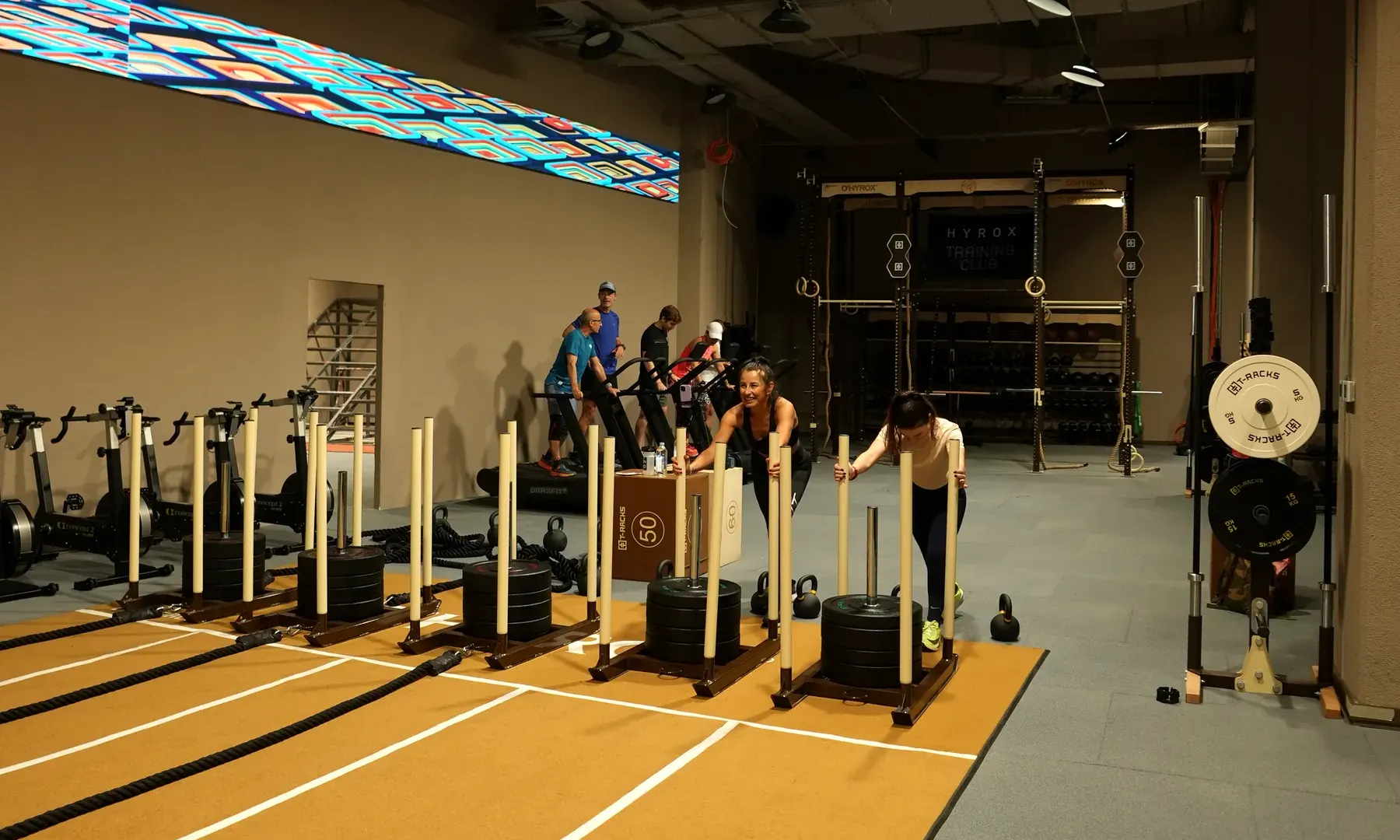
The Maximum Velocity Phase: Upright Running Mechanics and Flying Sprints
Once acceleration ends, the maximum velocity phase begins: the torso rises and ground contacts shorten. Here is how to train it safely with flying sprints.
The maximum velocity phase is the part of a sprint where, once acceleration is complete, the athlete tries to hold the highest speed they can reach. For short-distance runners it is the heart of the race; for someone who plays soccer, rugby or basketball it shows up on a counterattack, while chasing a ball into open space or while recovering on defense. Most team-sport athletes drill their first steps heavily but almost never program this phase. Yet teaching the body to apply force in an upright position with very brief ground contacts directly affects both the speed ceiling and how prepared the hamstrings are for high velocity.
The Transition from Acceleration to Top Speed
During acceleration the torso leans forward, the foot strikes behind the hips and every step produces a horizontal push that drives the body ahead. As speed rises, that lean decreases on its own. The transition should be released gradually rather than forced: if the athlete pops upright suddenly they brake, and if they stay leaning too long their steps shorten and they stumble. In the maximum velocity phase the goal is a torso that is tall but not stiff, hips that stay high and a foot that lands just beneath the body.
At this point the direction of force changes. Instead of a horizontal push, a stiff, vertical strike into the ground becomes more important. As contact time shrinks, how much force the athlete can transfer in that brief moment becomes decisive. That is why maximum velocity is not only about leg power but also about stiffness around the ankle and knee, the spring-like elastic behavior of the lower limb.
Core Elements of Upright Running Mechanics
Keeping technical conversations simple pays off. Giving an athlete ten cues at once means none of them get applied during fast movement. The elements below can be used as an observation checklist; the coach should focus on only one of them in any given session.
- Kalça yüksekliği: Kalça düşükse diz bükülü kalır ve temas uzar. Sporcu uzun boylu koşuyormuş gibi hissetmelidir.
- Ön ayak teması: Ayak topukla değil, ayağın ön kısmıyla ve vücudun altına iner. Öne uzatılan bir ayak fren gibi çalışır.
- Ön taraf mekaniği: Diz öne ve yukarı gelirken topuk kalçanın altından geçer. Bacağın arkada uzun süre sallanması zaman kaybıdır.
- Kol hareketi: Kollar omuzdan sallanır, gövdeyi döndürmeden ritmi taşır. Sıkılı yumruk ve kalkık omuz gerginlik yaratır.
- Rahat yüz ve boyun: Çene gevşek, bakış ileri. Yüzdeki gerginlik çoğu zaman omuzlara ve kollara yayılır.
What a Flying Sprint Is and How to Set One Up
A flying sprint is a repetition in which the athlete builds speed gradually through a run-in zone and enters the measured zone already moving fast. Because it does not require a standing start, the heavy force demand of acceleration is reduced and attention shifts entirely to upright mechanics. The most common setup is to leave enough distance after a cone line for building speed and then mark a short measured zone.
The length of the run-in zone depends on the athlete's level. A beginner may not reach high speed in a short build-up, while an experienced sprinter needs a longer zone. The measured zone should stay short, because the aim is not to tire the athlete but to let them show top speed for a few strides with clean technique. If timing gates are available, times are recorded; if not, coach observation and a simple stopwatch still give direction.
Rest, Volume and Quality
Maximum velocity work is not a conditioning session. When the nervous system fatigues, contact times lengthen, the hips drop and the reps turn into rehearsal for slower running. That is why full or near-full rest is given between repetitions. The athlete should have caught their breath, feel no heaviness in the legs and be eager for the next rep.
Total volume is kept low, and the session ends once times start slowing noticeably. One of the hardest calls a coach makes is to stop while the athlete is still keen, yet in a speed session every rep added after quality drops reinforces a movement pattern you do not want learned.
Hamstring Readiness and Safety
At high speed, as the trailing leg swings forward and the foot prepares to land, the hamstrings lengthen and produce large forces at the same time. That makes the maximum velocity phase one of the most demanding situations for these muscles. Removing speed from the program entirely is not the answer; regular, controlled exposure is part of preparing the muscle for that demand. The real risk comes when an athlete who has not sprinted for months suddenly hits top speed in a match or a test.
- Before a sprint session, do a thorough warm-up and progressively faster build-up runs.
- Include strength exercises that load the hamstrings at long muscle lengths in the weekly program.
- Do not schedule maximum velocity work right after a heavy leg session.
- If you feel tightness or a pulling sensation in the back of the thigh, stop the session; if it persists, consult your physician.
Common Errors and How to Correct Them
The first error is trying to force speed up before entering the measured zone. The athlete tenses through the run-in, overstrides and arrives in the timed section already tight. The fix is to treat acceleration like a ramp and save peak effort for only the last few strides. A rep that starts relaxed often ends with a better time.
The second error is trying to lengthen the stride by reaching the foot forward. A longer stride may look like more speed, but when the foot lands ahead of the torso every contact creates a small braking effect. To correct it, asking the athlete to strike the ground harder and beneath the body works better than asking for a longer stride. A third common problem is the torso leaning back as fatigue sets in, which usually signals insufficient rest or a session that has run too long.
A simple side-on video recording is very helpful for spotting these errors. When athletes watch their own running in slow motion, they grasp the details a coach tries to describe in words much faster.
Fitting Drills into the Weekly Plan
Speed work goes on days when the athlete is fresh and at the start of the session. For team-sport athletes, the high-intensity, low-volume training day a few days before a match is a suitable window. For short-distance runners, acceleration and maximum velocity are usually covered on separate days or in different blocks of the same session. What matters is treating this work as one of the week's main targets rather than an add-on done on tired legs.
For athletes training in Sarıyer, the indoor space at O'Athletic Sky allows reps to be done on the same surface and over the same distance even on days when the weather would spoil sprint quality, which makes week-to-week time comparisons easier.
Frequently Asked Questions
Are flying sprints or standing-start sprints more useful?
They develop different qualities. A standing start targets acceleration force, while a flying sprint targets upright mechanics and top speed. Most athletes need both in their program; the ratio depends on the demands of the sport and the athlete's weaknesses.
Does a team-sport athlete need maximum velocity work?
Yes. Not every sprint in a match reaches top speed, but open-field runs are common. Approaching that speed regularly in training helps ensure the athlete is not caught unprepared for high velocity in a match.
How long should I rest between reps?
Look at perceived readiness rather than a fixed time. Breathing should return to normal, the legs should feel light and the next rep should be run at least as well as the previous one. If times are slowing, rest is insufficient or it is time to end the session.
Related articles.
High performance for masters athletes (35+): strength, speed and recovery
Strength, speed and recovery for masters athletes (35+): how physiology changes with age, program adjustments and ways to maintain performance.
Reading Test Data: Measurement Error, Real Progress and Noise
Is the difference between two measurements real progress or ordinary fluctuation? Understanding measurement error protects athletes from wrong decisions.
Periodization 101: pre-season, in-season and off-season programming
What is periodization, and how should training be planned in the pre-season, in-season and off-season? A practical periodization guide for athletes.
