
Athletic performance program for footballers: sprint, power and repeated sprint ability
An athletic performance program for footballers: sprinting, explosive power, repeated sprint ability and hamstring injury prevention.
Football is a game where players cover 10–12 km in 90 minutes, yet the decisive moments happen in 10–30 meter sprints. A good performance program has to meet both realities at once: a durable engine and explosive top speed.
The physical demands of football
- High-volume, low-intensity work: Most of the match is walking and jogging; the aerobic base determines recovery.
- Repeated sprints: 150–250 high-intensity actions per match, with short recoveries in between.
- Acceleration and braking: Most sprints are under 20 meters; eccentric braking strength is critical.
- Changing direction and contact: Trunk stability and single-leg strength.
- Injury profile: The hamstrings, adductors and ACL are the most commonly affected areas.
The order of program priorities
1. Hamstring and posterior chain strength
About a third of muscle injuries in football affect the hamstrings, and most occur during high-speed running. The Nordic hamstring curl, done in 2 sessions per week for a total of 12–24 reps, is an essential part of the program. Hip extension strength is supported with Romanian deadlifts and single-leg RDLs.
2. Regular exposure to maximum velocity
One of the strongest protections against hamstring injury is running at near-maximal speed at least once a week. Flying sprints of 30–40 meters (150–250 m total) are scheduled once in the training week. This work is done at least 72 hours before match day.
3. Acceleration and braking
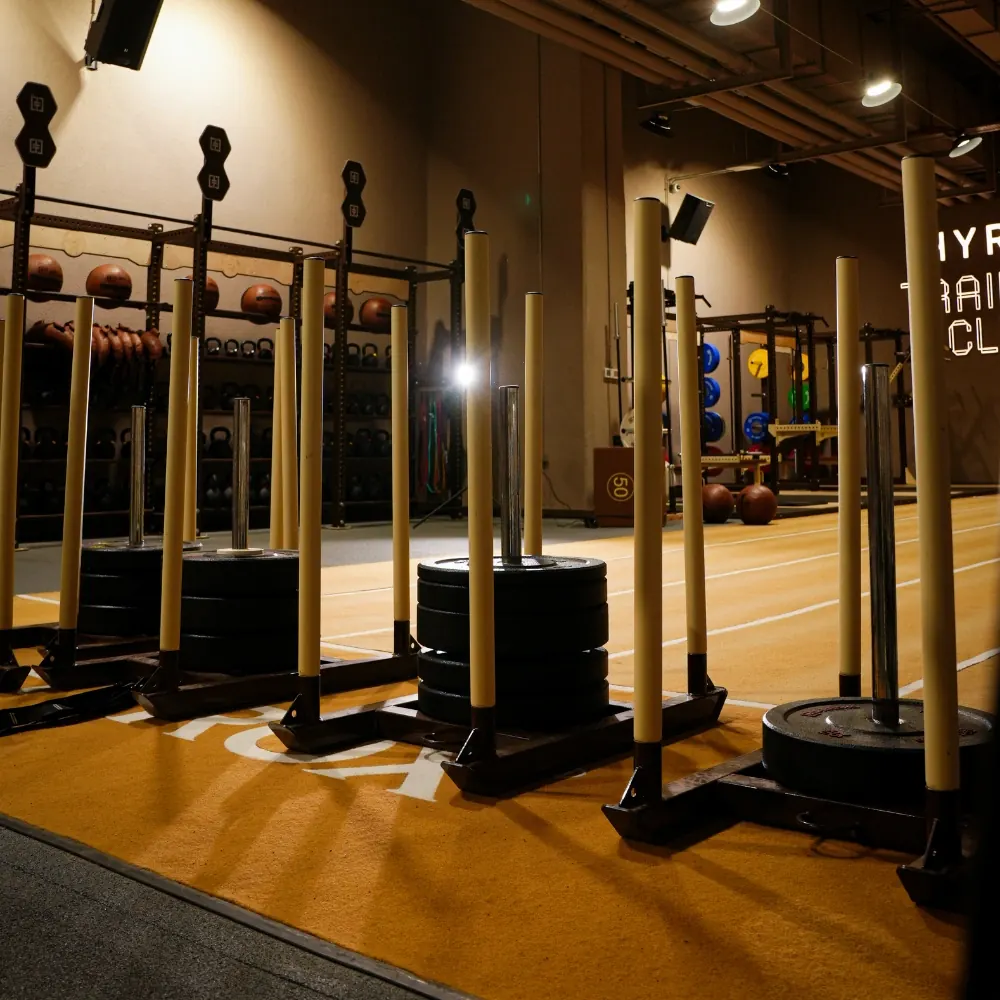
Horizontal force production is developed with heavy sled pushes (70–100% of body weight); eccentric capacity is increased with braking drills and 5-0-5 work. Braking work volume is kept low, as it tends to cause muscle soreness.
4. Repeated sprint ability
6×30 m sprints with 20–25 seconds of recovery between them; 3–4 sets. This work keeps your speed from dropping in the final 15 minutes of a match. If the aerobic base isn't strong, these sets quickly lose quality.
5. Aerobic base
Zone 2 work (40–60 min) or 30-15 style intermittent intervals 1–2 times a week. In-season, matches already cover most of this load.
Sample week (in-season, Saturday match)
| Day | Session |
|---|---|
| Sunday | Active recovery, mobility, contrast therapy |
| Monday | Heavy strength: trap bar deadlift, Bulgarian split squat, Nordic curl |
| Tuesday | Team training + maximum velocity block (150 m) |
| Wednesday | Repeated sprints + tactics |
| Thursday | Short strength session (power-focused), low-volume jumps |
| Friday | Light tactics, activation, sleep as a priority |
| Saturday | Match |
Position-specific emphases
- Wingers and fullbacks: The highest sprint volume. Maximum velocity and repeated sprints are the priority.
- Midfielders: The highest total distance. Aerobic capacity and change-of-direction economy.
- Center backs: Jumping, contact power and short-distance acceleration.
- Goalkeepers: Reactive agility, plyometrics, hip and shoulder mobility.
Frequently asked questions
Does strength training make footballers heavier?
No. In athlete programming the goal is strength per kilogram, not muscle mass; a well-written program improves sprinting and jumping.
What should you eat on match day, and how many hours before?
A carbohydrate-rich main meal 3–4 hours before, and 30–60 g of easily digestible carbohydrates 1 hour before. For details, see the sports nutrition guide .
How many strength sessions per week in-season?
1–2 sessions are enough; keep them short, heavy and low in volume.
For a program specific to your position, start with an you can start with a
Related articles.
Countermovement jump (CMJ) test: how to do it and what it tells you
How is the countermovement jump (CMJ) test performed, what values are normal, and how is it used for fatigue monitoring? A comprehensive CMJ guide for athletes.

Drop Jump and Reactive Strength Index: Measuring Ground Contact
What defines a fast athlete is not only how high they jump but how quickly they leave the ground. The drop jump shows exactly that.
Mental preparation for athletes: focus, routines and performance under pressure
Even with identical physical preparation, mental skills determine performance under pressure. A practical framework built on breathing, routines and focus cues.
