
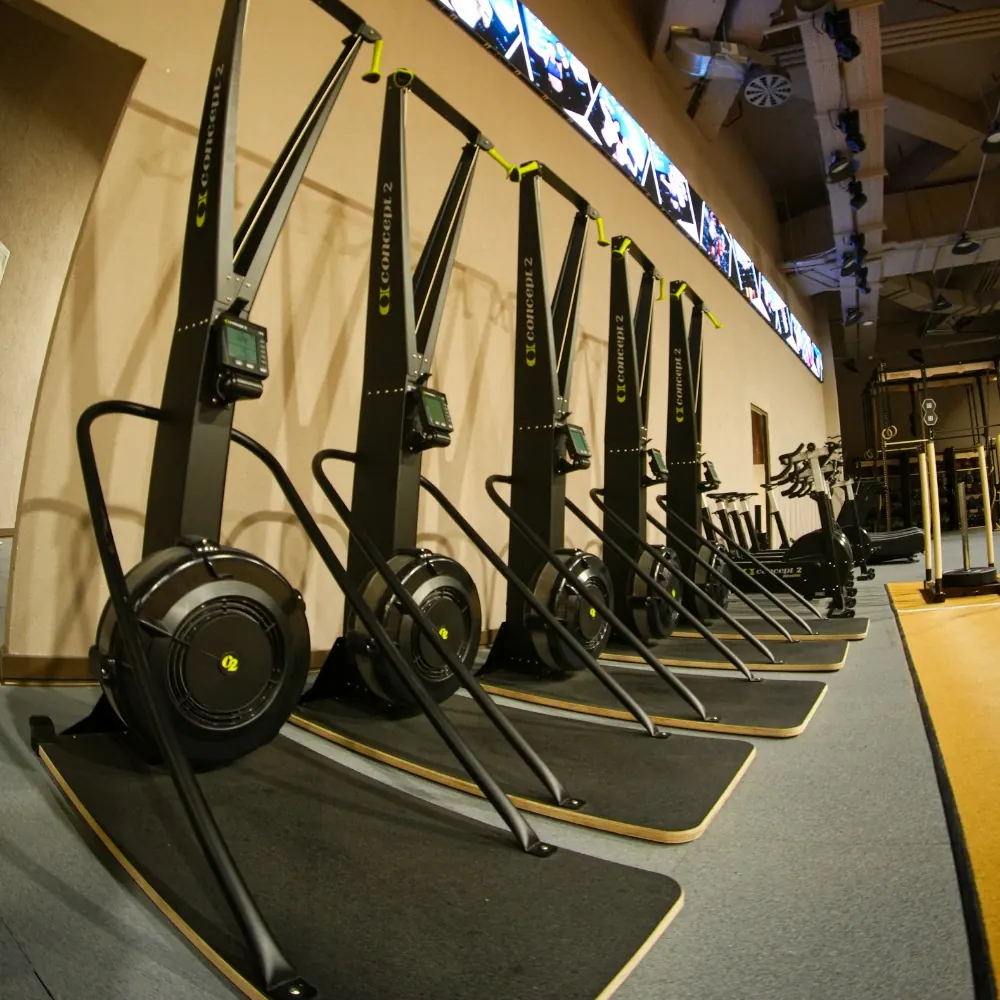
The first 8 weeks for an athlete new to strength training
The first 8 weeks for an athlete new to strength training: learning movements, load progression, weekly plan and common mistakes.
The first weeks are the most decisive period of the strength training journey. The foundation laid now affects the rate of progress and injury risk for years to come. The good news: almost any consistent program works for beginners. The bad news: those who rush lose this advantage quickly.
What happens in the first 8 weeks?
Most of the strength gain in this period is neural: the brain learns to use existing muscle better. Motor unit recruitment increases, intermuscular coordination develops and movement economy improves. Increases in muscle mass usually become noticeable after weeks 6–8.
That's why rapid progress in the first weeks is normal and won't last forever. Setting the right expectations from the start matters for sustaining motivation.
Weeks 1–2: learning the movements
Goal: Learn the six fundamental movement patterns correctly. Load comes second.
- Goblet squat 3×8
- Romanian deadlift (light) 3×8
- Push-up variation 3×6–10
- Inverted row 3×8
- Split squat 2×8 each leg
- Farmer’s carry 3×20 m
- Dead bug 2×8, Pallof press 2×10
2–3 sessions per week. End every set feeling “I could have done 2–3 more reps.” Muscle soreness is possible in this phase; if it's severe, reduce volume slightly.
Weeks 3–5: adding load
Goal: Gradual load increases while maintaining technique.
- Back squat or goblet squat 3×6–8
- Trap bar deadlift 3×6
- Dumbbell bench press 3×8
- Lat pulldown or pull-up variation 3×8
- Bulgarian split squat 3×8 each leg
- Core block, 8 minutes
Load increases: 1–2 kg per week for the upper body, 2.5–5 kg for the lower body. If you can complete the target reps without technique breaking down, the load goes up.
Weeks 6–8: moving into the strength range
Goal: Heavier loads with fewer reps; preparation for a true strength block.
- Squat 4×5
- Trap bar deadlift 4×4
- Bench press or overhead press 4×5
- Heavy row 4×6
- Single-leg and core accessories
- Nordic curl 2×4 (gradual introduction)
At the end of week 8, an estimated 1RM test is performed and the next block is written around those numbers.
Weekly plan options
| Per week | Structure | Who it's for |
|---|---|---|
| 2 sessions | 2 full-body | Athletes with heavy sport practice loads |
| 3 sessions | 3 full-body or upper/lower/full | Ideal for most beginners |
| 4 sessions | 2 upper + 2 lower | Those with the time and recovery capacity |
Common mistakes
- Increasing load too fast: Technique breaks down and injury risk rises. “I can do it” is not the same as “I can do it right.”
- Training to failure every session: Unnecessary for beginners; it makes recovery harder.
- Constantly switching programs: Progress comes from measurable gains on the same movements. Keep the same framework for at least 8 weeks.
- Skipping the warm-up: Especially for beginners, technical preparation happens in the warm-up.
- Using only machines: Free weights provide the stability and transfer athletes need.
- Ignoring nutrition and sleep: Adaptation happens during recovery, not during training.
- Treating muscle soreness as a measure of success: Soreness shows that the stimulus is new — not that you're progressing.
When should you get coaching support?
Free-weight technique is hard to learn from videos. A few coached sessions in the first 4–6 weeks prevent mistakes that would otherwise need correcting over and over for years. This support is especially valuable for the squat, deadlift and overhead press.
Measurement: what should you track?
- Load and reps on the main lifts (training log)
- Estimated 1RM at the end of week 8
- Body weight and, if needed, circumference measurements
- If you're an athlete: jump and sprint numbers
Keeping a training log is the highest-return habit for beginners: progress becomes visible and program decisions are based on data.
Frequently asked questions
Can I progress without muscle soreness?
Yes. Soreness is not an indicator of progress; increasing load and reps are a more reliable measure.
Should I do cardio too?
Yes — two moderate-intensity sessions per week won't hinder strength gains and support recovery.
Should I take supplements?
Not at the start. Adequate protein and sleep matter more than any supplement.
How soon will I notice a difference?
Typically 2–4 weeks for strength and 8–12 weeks for appearance.
Related articles.
Adductor Strength and Groin Health: A Program That Starts with the Copenhagen Plank
The inner thigh muscles work constantly in cutting, kicking and sliding movements yet are often forgotten in programs. We explain the Copenhagen plank and its progressions.
Strength training for women: myths and facts
Strength training myths and facts for women: bulking, rep ranges, hormones, bone health and program differences.
Dry-Land Strength for Swimmers: Start Jump, Shoulder and Trunk Work
Alongside hours in the pool, dry-land work supports a swimmer's start, turns and trunk control. We explain what to focus on and how.
