
Complex Training: Pairing Heavy Loads and Jumps in the Same Set
Following a heavy lift with a similar explosive movement is one way to train strength and power in the same session. Pairings, rest and who it suits are covered here.
Complex training is a set structure in which a heavy strength exercise is followed by a light, explosive exercise with a similar movement pattern. A vertical jump after a heavy squat set, or a medicine ball chest pass after a heavy bench press set, are typical examples. The idea behind the method is that the heavy load wakes the nervous system up for high force and that, under certain conditions, this state can carry over into the fast movement that follows. That effect does not appear for everyone or every time, though; how it is set up decides the outcome.
The Balance Between Fatigue and Readiness
A heavy set creates two things at once: it stimulates the nervous system and it produces fatigue. An athlete who moves straight to a jump after the set usually performs while fatigue dominates, and the jump comes out weaker. After a certain rest, fatigue fades while the heightened state may linger for a while. In complex training the aim is to find that window. Its length varies from person to person, load to load and training history to training history.
That is why, instead of applying complex training as a rigid formula, the athlete needs to be observed. If jump height or throw distance can be measured, it is possible to test different rest periods over a few sessions and find the right interval for that person.
In practice this window can range from a few minutes to considerably longer. Strong, experienced athletes may recover from the heavy set faster and make use of the heightened state, while in athletes with less training history fatigue may dominate for longer. Even in the same athlete, sleep, nutrition and the load of previous days shift this balance. So a rest period that worked one week may not be enough in a busy match week.
One practical tip is to ask the athlete how they feel after the heavy set. If the legs feel heavy and burning, keep waiting; if they feel light and quick, move to the jump. This subjective feedback is a useful guide even where no measuring tool is available.
Who It Suits
Complex training tends to produce clearer results in athletes with a solid strength base. For an athlete who cannot yet lift heavy loads safely with good technique or control jump landings, developing those two skills separately comes first. The method is not a shortcut but a tool to use once the foundation is in place.
- Athletes with consistent technique on heavy lifts and at least a few seasons of strength training history.
- Athletes whose landing mechanics are established and who can land softly without the knee caving inward.
- Teams that want to maintain strength and power together in short in-season sessions.
- Athletes with limited training time who need to work on two qualities in one session.
Assessing the strength base does not require complicated tests. Being able to hold back angle through heavy squat and deadlift reps and to make quiet, balanced landings after several box jumps are good starting signs.
Sample Pairings
The basic rule of pairing is that both movements use similar muscle groups and a similar direction. The heavy exercise represents strength and the second represents speed. The pairs below offer a sensible starting framework.
- Back squat ve dikey sıçrama: Alt vücut, dikey yön. En klasik çift.
- Trap bar deadlift ve geniş atlama: Kalça baskın itiş, yatay yöne aktarım.
- Bench press ve sağlık topu göğüs atışı: Üst vücut itiş, ileri yön.
- Bölünmüş squat ve tek bacak sıçrama: Tek taraflı kuvvet ve sporun çoğu hareketine yakın bir pozisyon.
- Ağır kızak itişi ve kısa sprint: Yatay kuvvet ve ivmelenmeye aktarım.
Sets, Reps and Rest Logic
Reps on the heavy exercise are kept low and the athlete completes every rep with clean technique. Going to failure here works against the purpose of the method; at the end of the set the athlete should have a few reps left in reserve. Reps on the explosive exercise are also kept low, because each jump or throw must be done with maximal intent. If quality drops after five or six jumps, the number is too high.
Adequate rest is given between the paired exercises and between sets. Complex training is intense but short; cutting rest and turning the session into conditioning lowers both strength and power quality. Two or three pairs per session are usually enough.
How It Differs from a Contrast Set
Some coaches alternate the heavy and light exercise back and forth within the same block for several rounds, while others finish all heavy sets first and then all explosive sets. The first is usually called a contrast arrangement and relies on the window logic described above. The second is a more traditional sequence. The choice depends on equipment layout, group size and how the athlete responds.
Common Mistakes
The most common mistake is making the heavy set heavier or longer than necessary. If the athlete is grinding through the final reps and technique breaks down, the jump that follows will most likely fall flat. In complex training the heavy set should be thought of as preparation that wakes up the nervous system, not as a test that exhausts the athlete. For that reason, the load should be adjustable to how strong the athlete feels on the day.
The second mistake is performing the explosive movement without intent. If the jump or throw becomes a habit repeated at half effort, the method loses its value. Giving the athlete a clear target on every rep, such as touching a height or clearing a line, keeps intent alive. The third mistake is neglecting landing quality. If landings get harder with fatigue, the knee caves in or the athlete loses balance, there are too many sets.
Finally, it must be accepted that complex training does not produce the same effect in every athlete. Some jump noticeably better after the heavy set, while others show no difference. In that case, rather than forcing the method, running strength and power work in separate blocks is a perfectly valid option.
Keeping records makes this decision easier. An athlete who notes the load of the heavy set, the rest time and the result of the explosive movement each session can see, after a few weeks, the arrangement that works for them with concrete data. Without a measuring tool, the athlete's sense of quickness and the coach's observation still offer valuable information.
Points to Watch When Programming It
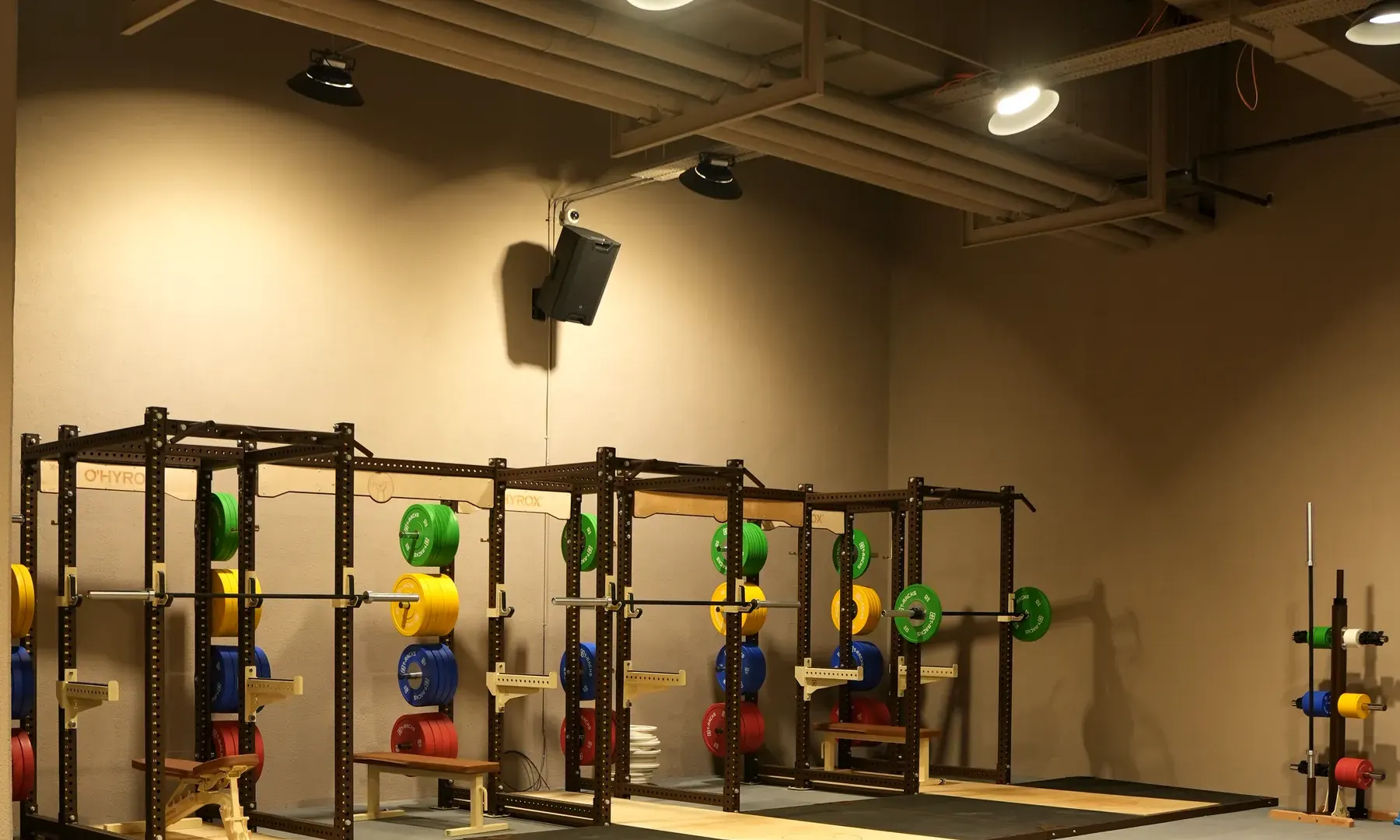
Complex training places high demands on the nervous system and should not be squeezed onto the same day as intense sprint sessions. It can be used more often in pre-season power blocks and as a short weekly block in season. If measurement is available, jump height or throw distance is tracked through the session; when values drop, the session ends. A layout where a strength station sits next to a jumping area, as at O'Athletic Sky in Sarıyer, makes the switch between the two exercises easier.
Frequently Asked Questions
Is complex training suitable for beginners?
Usually not. For a beginner, learning heavy lifting technique and landing control separately comes first. Once that foundation is in place, the method can be added gradually.
How long should I wait between the heavy set and the jump?
There is no single time that applies to everyone. Moving on immediately often lowers quality because of fatigue. Testing different intervals over several sessions and finding the time at which jump quality is best is the most practical approach.
How often should complex training be done?
Once or twice a week in pre-season power blocks and one short block a week in season is enough for most athletes. Total load should be assessed alongside other high-intensity sessions.
Related articles.

From Maximal Strength to Speed: How Gym Power Transfers to the Field
Being strong in the squat does not automatically make you fast. We explain which bridges are needed for strength to become speed on the field.
Deadlift technique guide: conventional or sumo?
Deadlift technique: conventional or sumo? Setup, the pull, common mistakes, lower back health and variation selection for athletes.
Bench press and upper-body pushing strength: an athlete-specific approach
Bench press technique and an athlete-specific upper-body pushing strength program: setup, shoulder health, variations and programming.
