
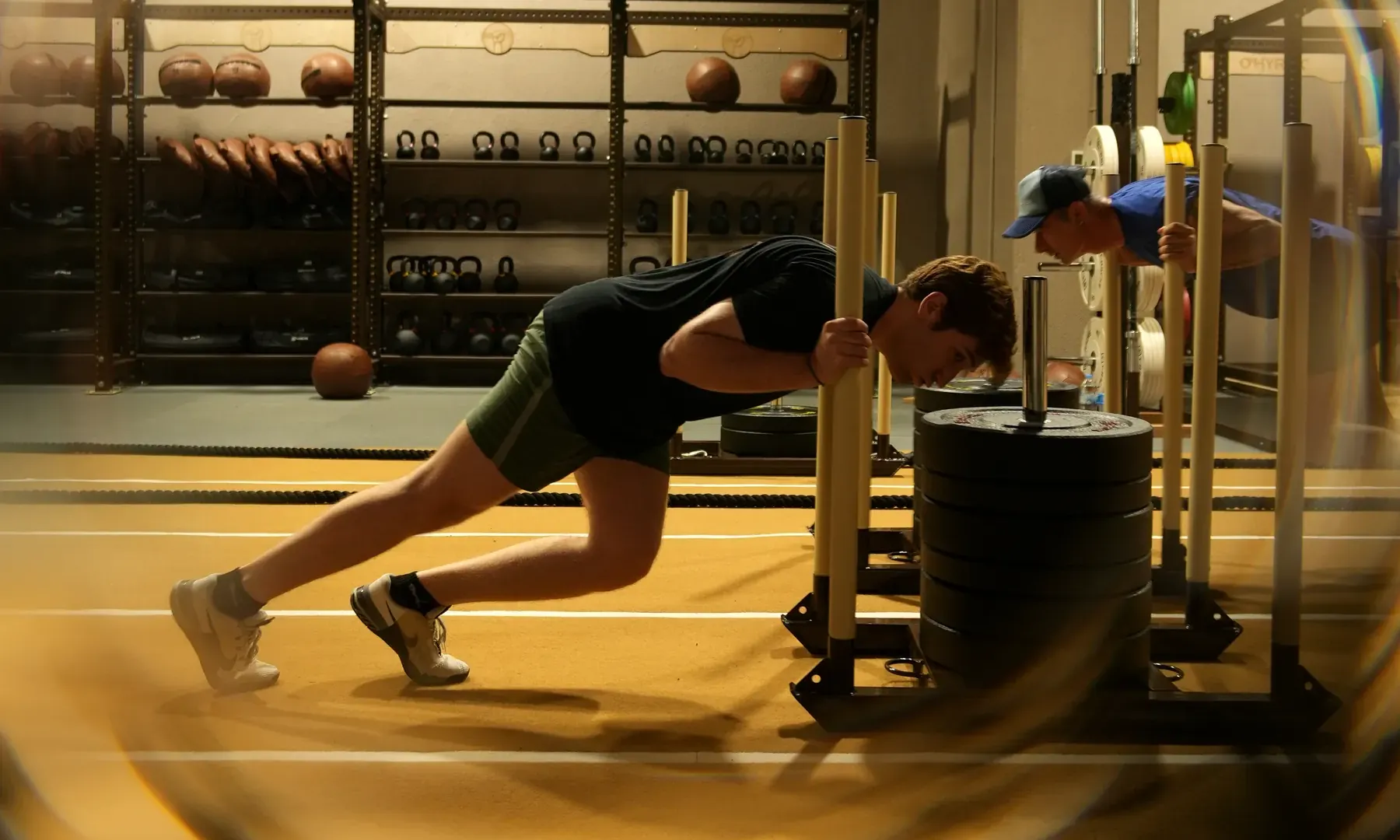
Partner Strength Sessions: Building a Shared Program with a Training Partner
Training with a partner can improve consistency, safety and motivation. We explain how two people at different levels can share a strength program.
Partner strength sessions are a setup in which two people train in the same time slot, sharing the same space and often the same program. Two friends, a couple, a parent and a young athlete or two players from the same team can work this way. The most obvious benefit of training together is consistency: when you have made a promise to someone, skipping the session is harder. Safety on heavy sets, feedback between sets and mutual encouragement at tough moments are further advantages. When two people differ in level, goals and programs, however, making a shared session productive takes some planning.
The Basis of a Shared Program
Two people following the same program does not mean they have to lift the same loads. A shared program shares exercise selection and session structure; load, reps and sometimes the exercise variation are adjusted for each person. For example, while one partner does barbell squats, the other may do goblet squats or box squats in the same session. Both work the same movement pattern, but each faces a challenge suited to their level.
Different goals are not an obstacle either. If one partner focuses on strength gains and the other on general fitness or muscular endurance, the main movements can stay shared while rep ranges differ. Accessory work at the end of the session can be split according to personal goals. This flexibility keeps the social advantage of training together while allowing individual progress.
Alternating Set Structure
The most practical structure for partner sessions is for partners to take turns doing sets. While one works, the other rests, watches and offers support if needed. This arrangement sets rest time naturally: one partner's set is the other's rest. On heavy, low-rep sets this time may sometimes be too short; in that case adding a short extra break between sets or pairing two exercises and rotating between stations helps.
- Aynı istasyonda sırayla: İki partner aynı barı ya da makineyi paylaşır, yükü her sette değiştirir.
- Eşleştirilmiş istasyonlar: Biri squat yaparken diğeri çekiş hareketi yapar, sonra yer değiştirir.
- Birlikte devre: Kondisyon bölümünde ikisi aynı anda farklı istasyonlarda çalışıp süre bitiminde döner.
- Partnerli egzersizler: Sağlık topu paslaşması ya da direnç bandıyla karşılıklı çekişler gibi iki kişinin birlikte yaptığı hareketler.
Making Load Changes Easy
If partners at different levels share the same bar, changing plates every set takes time and slows the session. To make this easier, loads can be planned in advance, plates can be kept ready next to the bar, or one partner can use a barbell while the other uses dumbbells for the same movement. It may seem a small detail, but this arrangement speeds up the session's flow noticeably.
A Sample Shared Session
Consider two partners, one with a few years of strength training history and the other just starting. The session begins with a shared warm-up: light cardio, mobility and a few activation movements. In the main block the experienced partner does barbell back squats while the beginner does goblet squats next to the same rack; sets alternate and each watches the other's technique. In the second block one does Romanian deadlifts while the other works a dumbbell hip hinge. The third block is paired stations of pulling and pushing movements. The session ends with a short conditioning circuit done together and a shared cooldown.
In this setup both people finish their training in the same time, lose no time waiting for each other and each works at their own level. As the weeks pass, the program is updated to match the beginner's progress; at some point they may move to the barbell too.
Safety and Spotting
A partner's presence on heavy sets can improve safety, but only with proper spotting knowledge. In exercises where the bar moves over the body, such as the bench press, the spotter should stand where they can catch the bar at any moment but should not touch it unless the lifter is struggling. For movements like squats, using a rack with safety pins is a more reliable method than a partner supporting from behind.
- Before the set, discuss how many reps will be done and when help will be requested.
- The spotter should give full attention to the lifter; phones and conversation can wait for the set to end.
- When help is needed, apply enough force to move the bar without taking over the movement entirely.
- For heavy squats and similar lifts, set the safety pins at the correct height.
If the difference in load and strength between partners is large, it may be hard for the lighter person to spot the partner lifting the heavier load. In that case safety pins, machines or dumbbell variations should be chosen. Safety always comes before ego or speed.
Partnering helps in the warm-up too. Dynamic movements done together can be enriched with short partner drills, such as medicine ball passes back and forth or walking against a band held by the partner. These small additions create shared energy from the start of the session.
Communication and Motivation
A good training partnership rests on open communication. Each person needs to be able to say comfortably that they are tired that day, have some pain or want to change the program. One partner constantly pushing the other to lift heavier can go beyond the healthy limits of competition. If comparisons are made, it is more meaningful for each person to progress relative to their own past performance rather than to each other.
That said, measured competition can boost motivation. Setting a shared goal, such as nailing the technique of a particular lift within a few weeks or preparing for an event together, encourages two people to look in the same direction. A short review at the end of the session is a good habit for sharing both what went well and what needs work.
Scheduling and Consistency
The biggest risk in partner training is that when one partner falls behind, the other skips the session too. To prevent this, the weekly plan should be set in advance, and it should become a rule that when one partner cannot come, the other continues the program alone. Two shared sessions a week plus one session for the personal program preserves both the advantage of training together and independence.
Partners who come together to O'Athletic Sky in Sarıyer can follow a shared program by using different stations in the same time slot; the coach can keep the main movements shared while adjusting loads and variations for each person. For partners with differences in age and experience, such as a parent and a young athlete, it is important that the young athlete's program suits their stage of development and does not model the adult's loads.
Finally, the social side of partner training is a gain in itself. Walking together after training, sharing a meal or talking through the week's plan turns the partnership into an enjoyable habit rather than just a program. In the long run, one of the most reliable ways to keep training regularly is to make it part of a relationship you enjoy.
Frequently Asked Questions
Can two people at very different levels train together?
Yes. When exercise selection and session structure are kept shared while load, reps and variation are adjusted to each person, partners at different levels can have a productive session.
What should I do if I don't know how to spot?
Learn spotting technique from a coach before heavy sets. Until then, choose a rack with safety pins, machines or dumbbell variations.
Should I skip training when my partner can't come?
No. Continuing the program alone maintains consistency. If needed, do heavy sets with safety pins or turn that day into a lighter session.
Related articles.
A guide for young athletes' families: the parent's right role and ways to support
In a young athlete's development, the family's attitude is as decisive as the training program. Support rather than pressure, process rather than outcome.
Training partners and athlete community: why people who train together stay the course
Discipline does not come from willpower alone; it also comes from environment. A training partner and a community are among the least recognised supporters of performance.
Preparing for Selection and Trial Days: A Guide for Athletes and Families
A team selection or trial session can be exciting but also stressful. We take preparation, expectations and the day itself in a calm frame.
