
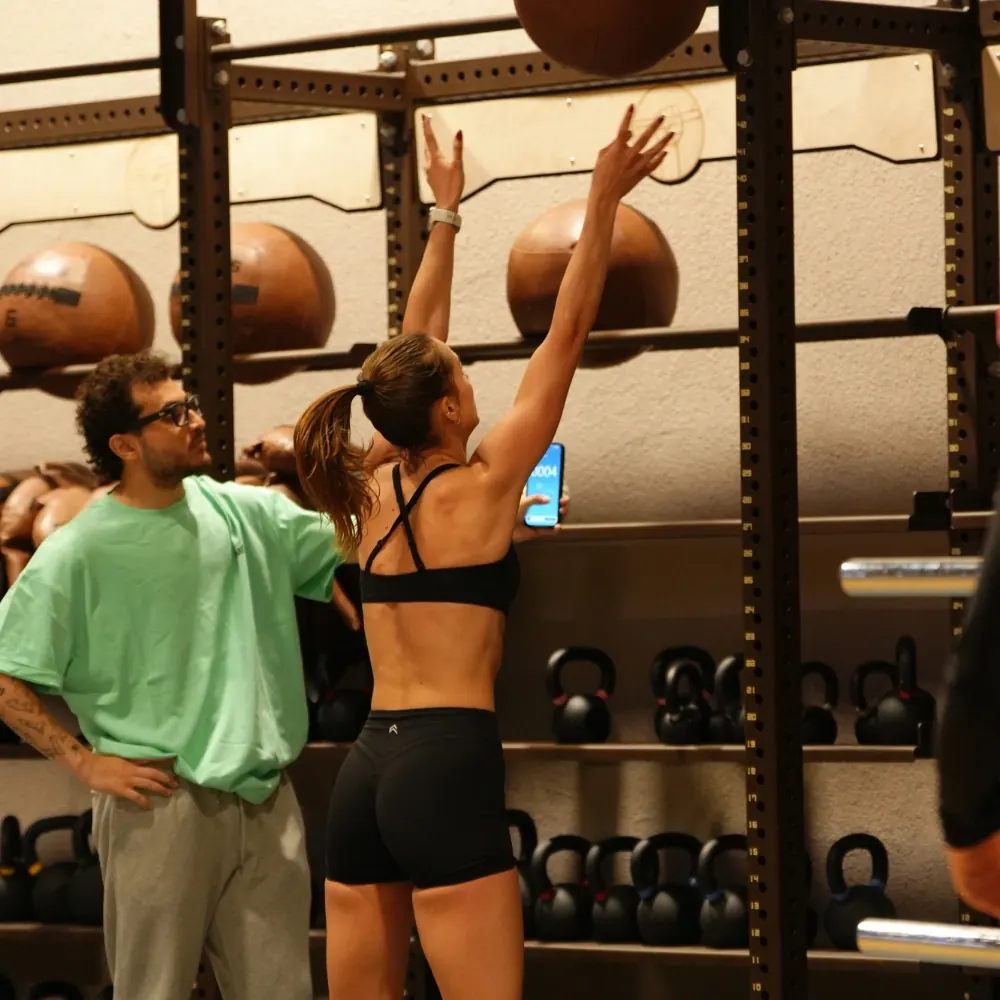
Core training for athletes: anti-rotation, anti-extension and transfer
Core training for athletes: anti-rotation, anti-extension, anti-lateral flexion and force transfer. What to do instead of sit-ups?
When people think of core training, sit-ups usually come to mind first. But for athletes, the trunk's main job isn't to produce movement — it's to resist it: transferring force from the legs to the upper body without loss while protecting the spine from unwanted movement. This perspective fundamentally changes what a core program contains.
The real function of the core
During a sprint, a strike or a push, the trunk is a transfer bridge. If that bridge goes slack, part of the force produced by the legs is lost in the trunk. The athlete works harder and produces less. That's why the goal of core work is the trunk's capacity to hold its position under load.
Three anti-movement categories
1. Anti-extension
Resisting excessive arching of the lower back. Critical for sprinting, overhead movements and heavy lifts.
- Dead bug: Lying on your back, lower back pressed to the floor; extend the opposite arm and leg. 3×8 each side, slow tempo.
- Plank variations: Increasing tension (RKC plank) is more effective than extending the duration. 3×20–30 s at maximal tension.
- Ab wheel / rollout: Advanced; a controlled reach without the hips sagging.
- Hollow body hold: Especially valuable for swimming and gymnastics.
2. Anti-rotation
Resisting unwanted rotation of the trunk. Comes into play under unilateral load and when changing direction.
- Pallof press: Stand side-on to a cable or band; resist rotation while pressing the arms forward. 3×10 each side.
- Single-arm farmer’s carry: Keeping the trunk upright while walking.
- Single-arm dumbbell press (standing): Pressing combined with rotational stability.
- Bird dog: Basic motor control; the hips stay still.
3. Anti-lateral flexion
Resisting the trunk bending sideways. Important in unilateral carries and single-leg stances.
- Suitcase carry: Walking with a weight in one hand. 3×20–30 m each side.
- Side plank: Without the hips dropping; in the advanced variation the top leg is raised.
- Copenhagen plank: Lateral stability combined with adductor strength; protective against groin injuries.
Rotational power: a separate topic
While anti-rotation provides control, many sports also require the trunk to rotate powerfully. These two capacities don't conflict; they complement each other. Medicine ball throws are used for rotational power: lateral rotational throws, scoop tosses, overhead slams. Sets of 4–6 reps at maximum velocity. For details, see our medicine ball article .
Do sit-ups have a place?
Sit-ups and similar flexion movements aren't recommended at high volume because they create repeated spinal flexion. Some sports (for example wrestling or gymnastics) require flexion strength, which can be programmed at limited volume. But in a general athlete program, anti-movement work is the preferred choice.
Breathing and trunk pressure
An often-overlooked component of core capacity is breath control. The diaphragm plays a central role in creating trunk pressure. The bracing technique used in heavy lifts (holding the breath and spreading it around the abdomen) should be taught; at the same time, relaxed diaphragmatic breathing at the end of sessions should be used to calm the nervous system.
Sample core block (10 minutes)
- Dead bug 3×8 (each side), slow tempo
- Pallof press 3×10 (each side)
- Suitcase carry 3×25 m (each side)
- Copenhagen plank 2×20 s (each side)
This block can be added to the end of a strength session or done as a separate short session 3 times a week.
Programming principles
- Frequency: 3 times a week, in short blocks.
- Tension > duration: 20 seconds of maximal tension instead of a slack 3-minute plank.
- Progressive load: The core is a muscle group too; resistance should increase over time (weighted carries, harder levers).
- Integrated work: Heavy squats, deadlifts, carries and unilateral movements already place high demands on the core; isolated work complements them rather than replacing them.
Low back pain and the core
A weak core isn't the only cause of low back pain; but improving trunk endurance is a widely accepted component in managing chronic low back pain. In this case, endurance-focused exercises done in a pain-free range (the McGill Big 3: curl-up, side plank, bird dog) are usually the starting point.
Frequently asked questions
I want visible abs — is this program enough?
Visibility is largely about body fat percentage; training alone isn't decisive.
How many seconds should I hold a plank?
Racing the clock is unnecessary. High-tension 20–30 second sets are more effective than slack holds lasting minutes.
Can I train core every day?
Low-volume work is tolerated, but 3 sessions a week is enough for most athletes.
If I lift heavy, do I still need separate core work?
Yes. Heavy lifts provide a good stimulus, but anti-rotation and lateral stability aren't trained enough.
Related articles.
Trap bar deadlift: why is it the first choice for athletes?
Why is the trap bar deadlift the first choice for athletes? Differences from the conventional deadlift, technique, load selection and its effect on sprint performance.
Dry-Land Strength for Swimmers: Start Jump, Shoulder and Trunk Work
Alongside hours in the pool, dry-land work supports a swimmer's start, turns and trunk control. We explain what to focus on and how.
Velocity-based training (VBT): strength training with velocity measurement
What is velocity-based training (VBT)? A practical guide to setting loads with bar velocity, velocity zones and velocity loss thresholds.
